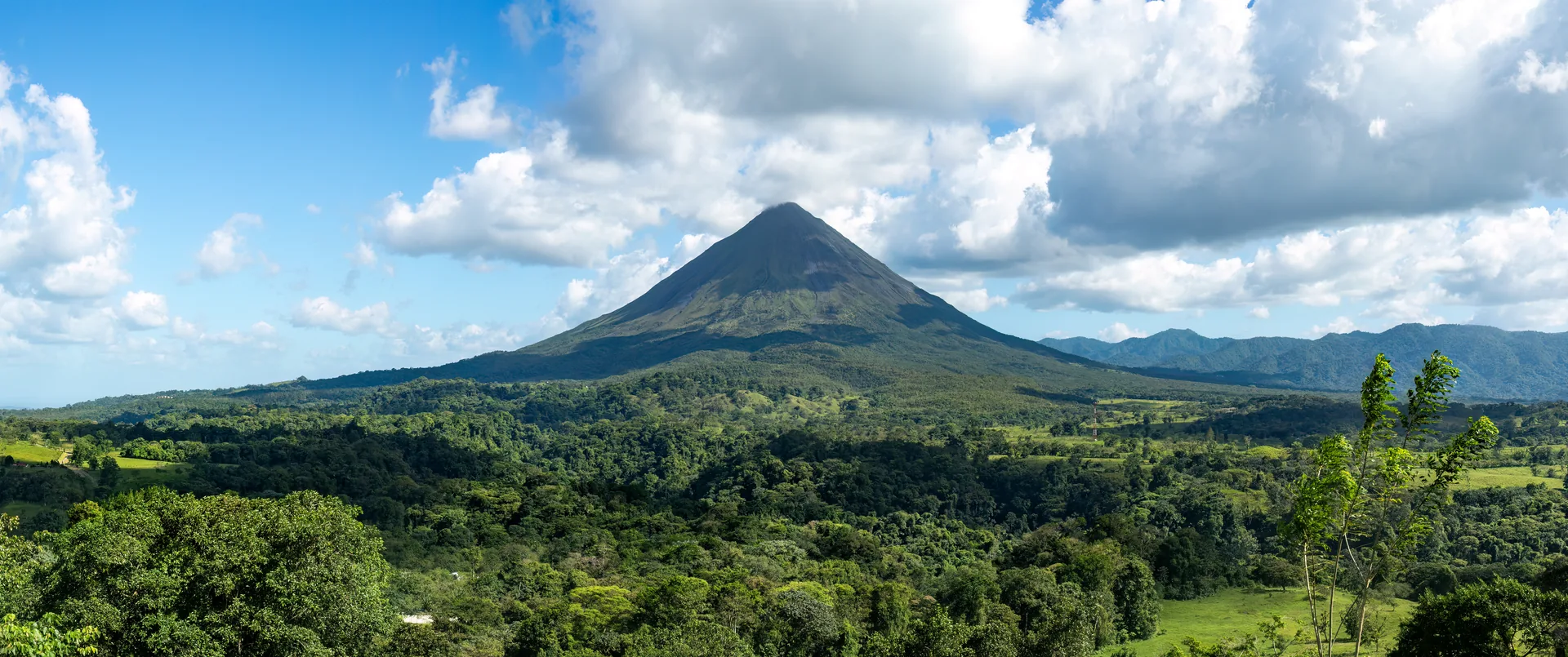
Arenal Volcano · La Fortuna · Costa Rica
A Volcano, a Waterfall, and a Soak in Its Warmth
Arenal's near-perfect cone stopped erupting in 2010, so this isn't about glowing lava any more. A day here is rainforest and canopy bridges, a 70-metre waterfall, the hardened 1968 lava fields underfoot, and — to finish — a long soak in rivers heated by the volcano itself. Here's how the day actually works.
the thing to know
Can you see lava? No.
It's the most-asked question about Arenal, and the answer shapes whether you'll love the day or feel let down. Here's the truth, plainly.
What a day at Arenal really is
What a day at Arenal really is
First: there's no lava
For forty-two years, from 1968 to 2010, Arenal glowed — a near-continuous eruption that drew travellers to watch red rock tumble down the cone at night. That era is over. Since December 2010 the volcano has been resting, and today there are no lava flows and no explosions, only faint steam at the summit. Any site promising glowing lava is selling you 2009. What Arenal offers now is quieter, and still wonderful — you just want to arrive knowing which trip you're taking.
A near-perfect cone, when the cloud lifts
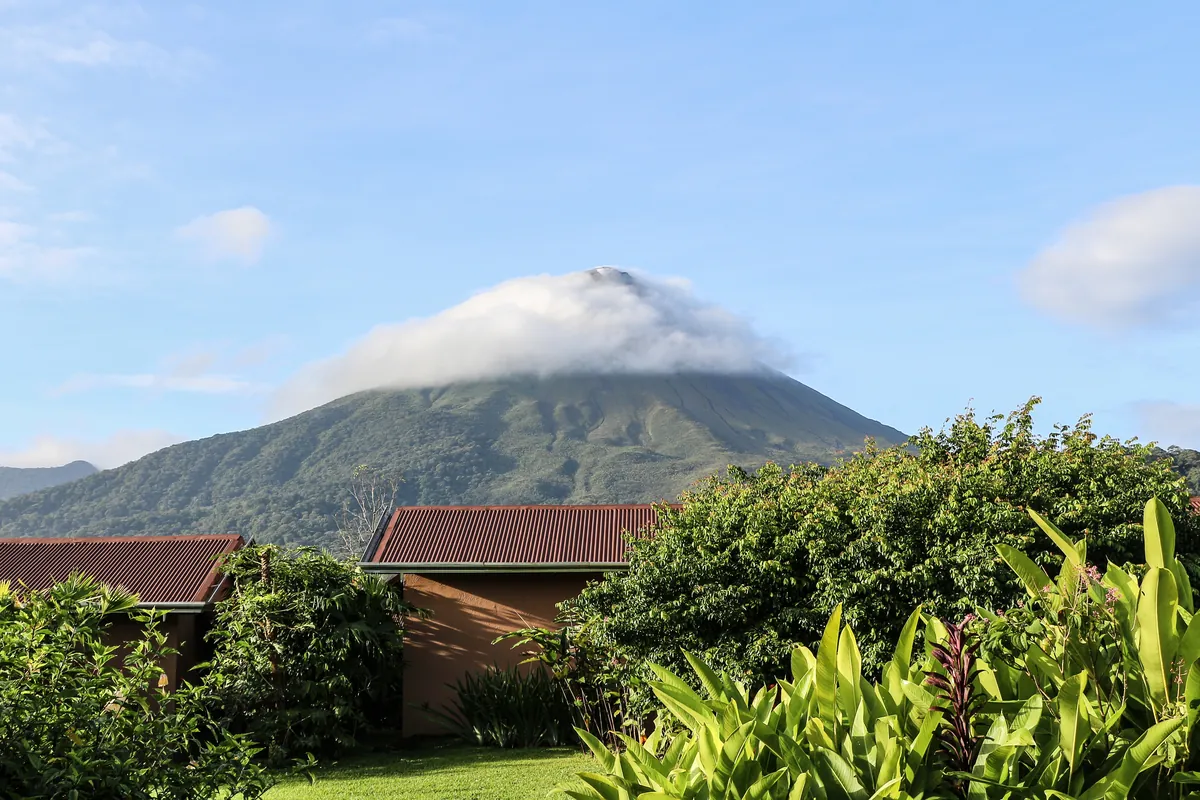
What remains is the mountain itself: a strikingly symmetrical 1,633-metre cone that is the signature image of northern Costa Rica. Its own microclimate means the summit is often wrapped in cloud, and a clear view is never guaranteed on a single day — mornings give the best odds. Around its base spreads the rainforest, Lake Arenal, and the town of La Fortuna, the base for everything you'll do here.
The real draw: a full, layered day
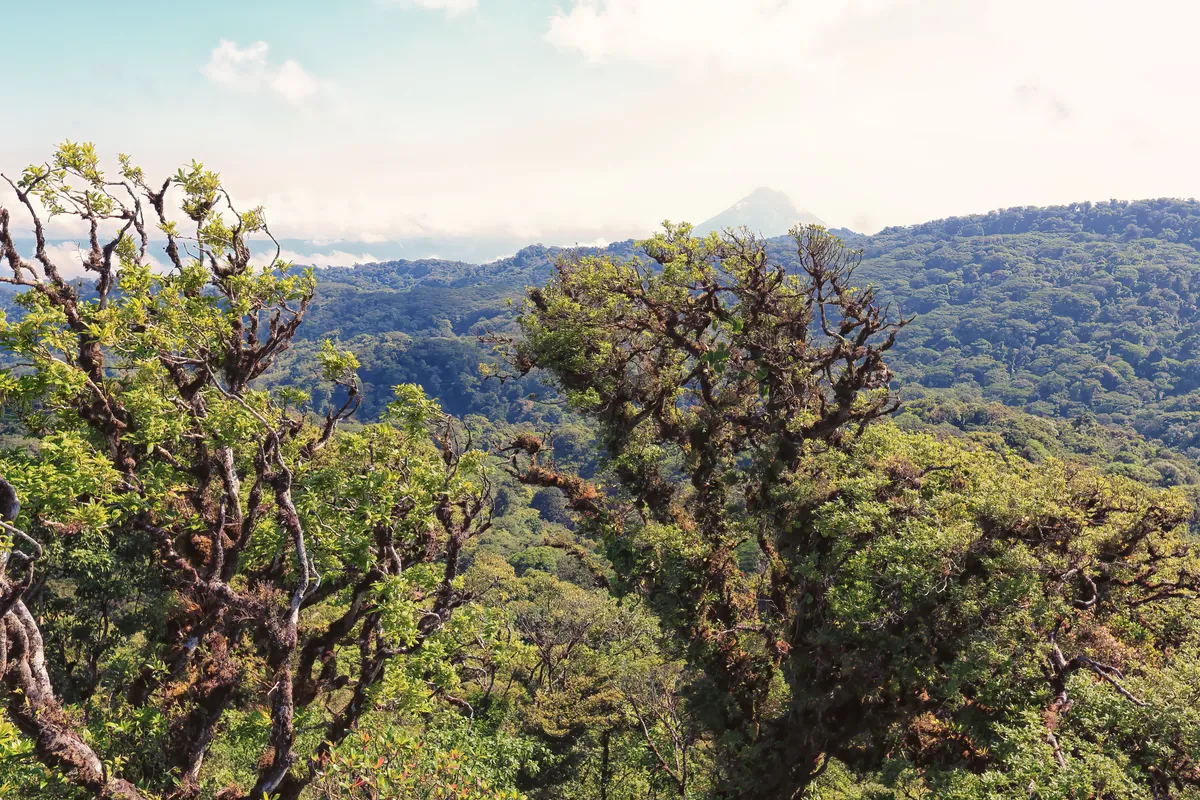
The reason to come is the combination. In one day you can walk across the black, hardened lava the 1968 eruption laid down, cross canopy bridges high in the rainforest, descend to a 70-metre waterfall, watch for sloths and toucans, and end the evening chest-deep in a river heated by the volcano's own hydrothermal system. It's scenery and warmth rather than fireworks — and taken as a whole, it's one of the best days Costa Rica offers.
the shape of the day
A day in three climates
The classic Arenal day moves through three worlds in a single arc — the green rainforest, the black volcanic ground, and the warm water at the end. Here's how it unfolds.
Morning · the rainforest
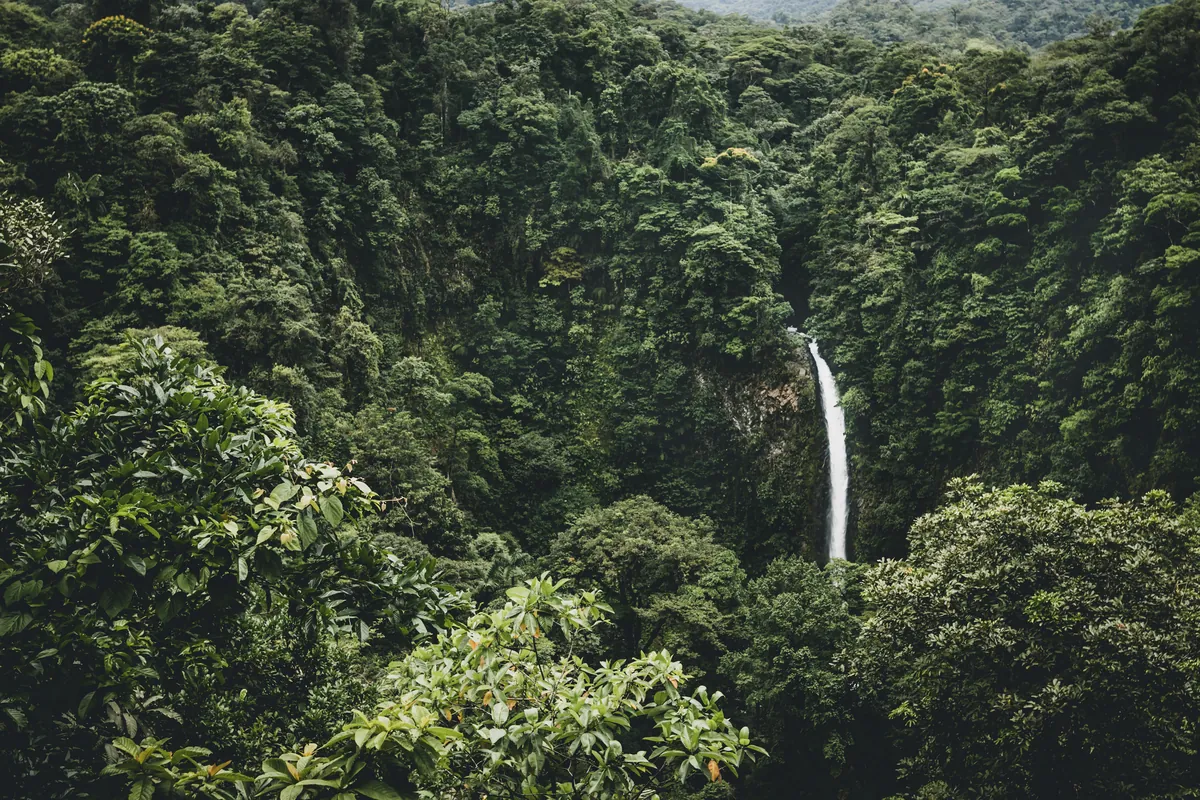
The day starts green and alive: an easy trail beside the La Fortuna River, a tractor-cart ride up to a panoramic viewpoint, then a jungle staircase down, across a high suspension bridge, to the 70-metre La Fortuna Waterfall, plunging into a clear pool you can swim in. Sloths doze in the cecropia trees, toucans and coatis appear along the trails. This is the lush, humid, birdsong half of the day.
Midday · the volcano
Then the ground turns black. The Arenal 1968 Trail crosses the hardened lava field the eruption laid down — an otherworldly stretch of black rock where pioneer plants are only now taking hold, rainforest crowding in on every side and the cone rising above (cloud permitting). You are walking on ground that was molten within living memory. Lunch usually falls around here.
Evening · the warm water
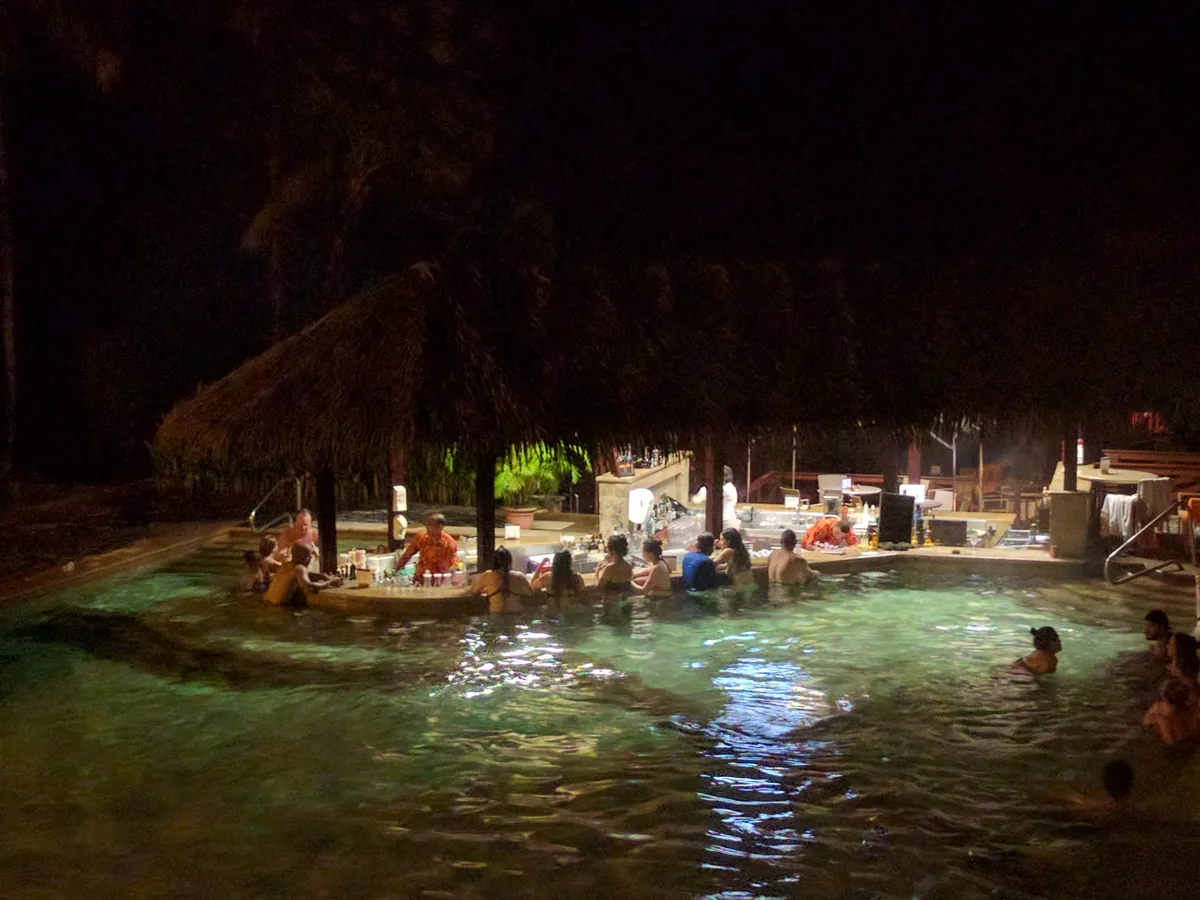
The day ends in the volcano's warmth. Every hot spring in La Fortuna is heated by the same hydrothermal system beneath Arenal, so the final act is a long soak in naturally heated pools and rivers as the light goes — the reward after the trails, and the thing most people remember most fondly.
What you'll see
What you'll see
A full Arenal day threads together half a dozen distinct sights within a short drive of La Fortuna. Here's what each one is.
Arenal Volcano itself
A near-perfect 1,633-metre stratovolcano, its symmetry the signature image of the region. It erupted continuously from 1968 to 2010 and now rests quietly, often crowned with cloud. The best views are from the national park and Lake Arenal on a clear morning.
The hardened lava field
A 4.7-kilometre trail across the black lava the 1968 eruption laid down — stark, otherworldly ground with pioneer plants reclaiming the rock and the cone rising above. Moderate to difficult, with steep, rocky sections; the most direct encounter with what the volcano did.
The Mistico canopy circuit
A circuit of suspension bridges strung through the rainforest canopy, letting you walk among the treetops where much of the wildlife lives. A gentler, airy counterpoint to the lava trail, and one of the best places to spot birds and sloths.
La Fortuna Waterfall
A 70-metre cascade dropping into a clear pool at the foot of the dormant Chato cone, reached by descending around 530 rainforest steps (with benches along the way). You can swim at the base — cold, fresh water after the warm humidity of the climb back up.
Sloths, toucans, coatis
Arenal's forests are full of life: three-toed sloths asleep in the cecropia trees, toucans and motmots, coatis crossing the trails, capuchin and howler monkeys, hummingbirds at every flower. A good guide will spot far more than you would alone.
The reservoir below the cone
At the volcano's foot lies Lake Arenal, a hydroelectric reservoir that supplies a large share of Costa Rica's power and gives the classic cone-over-water view. Some tours pause here for the photograph; it's the postcard of the region.
Which hot springs?
Which hot springs?
| Tabacón | Baldi | EcoTermales | |
|---|---|---|---|
| Feel | Luxury jungle river | Big, lively, family | Quiet, adults, capped |
| Scale | Landscaped thermal river | ~25 pools + waterslides | Four natural pools, ~100 guests |
| Best for | A special, serene soak | Families and groups | Couples and calm |
| Note | Premium day-pass pricing | Party atmosphere | Reservation only |
| The water | Same volcanic source | Same volcanic source | Same volcanic source |
Day trip, or stay in La Fortuna?
Day trip, or stay in La Fortuna?
The single biggest decision is where you base yourself. A day trip from San José is doable and popular — but it's a lot of road, and the alternative is genuinely more relaxed.
Everything in one long day
A packaged tour from San José collects you early, drives three to three-and-a-half hours north (often with a craft-town or coffee stop), does the waterfall, a hike and the bridges with lunch, finishes at the hot springs, and drives you back — a full 12 to 14 hours, six to seven of it on the road. It works, and it's the way most day-trippers see Arenal; just go in knowing it's a big day.
The same day, unhurried
Base yourself in La Fortuna and the same sights become a calm half- or full-day with almost no driving — plus the best chance of catching the cone clear at dawn. If Arenal is a priority rather than a tick-box, a night or two in La Fortuna is the far more rewarding way to do it, and it opens up more of the springs and trails at your own pace.
when to go
When to go, and what to bring
Arenal is a year-round trip, but the season shapes the cone views, the trails and the price.
Dry season (Dec–April)
The dry season, and especially January to March, gives the best odds of a clear cone, the driest trails and the most reliable weather — at the cost of the biggest crowds and the highest prices. If a clear view of the mountain matters most to you, this is the window to aim for, and to book ahead.
Green season (May–Nov)
The green (rainy) season is lush, quieter and cheaper, with fuller waterfalls and vivid rainforest — but afternoon showers are the norm. Since the hot springs are the afternoon-and-evening finish, soaking in warm rain is common; many find it atmospheric, but pack accordingly and expect the cone to hide more often.
The daily weather
Whatever the season, Arenal's own microclimate can deliver sun, cloud and rain in a single day, with days around 27°C and cooler nights. Mornings tend to be clearest for the cone; build your day so the trails come early and the springs come later, when a shower matters less.
What to bring
Pack a swimsuit for the pools and the waterfall, clothes that dry fast, something waterproof for sudden rain, shoes with real grip for the trails, sunscreen that's safe for the water, and bug spray. A hat helps, and a dry bag keeps your phone and camera safe through the humidity, the water and everything in between.
Arenal, in pictures
Arenal, in pictures
Arenal volcano & hot springs tours
Find an Arenal day for your dates
Book any of these Arenal days through GetYourGuide — the ride out from La Fortuna, park entry, the waterfall stop and the hot-springs soak are all arranged, with the exact price in your currency shown before you confirm.
Planning your visit
Planning your visit
Decide where you'll sleep first
Everything follows from one choice: a day trip from San José, or a base in La Fortuna. Day trips suit travellers short on time or passing through the capital; a La Fortuna base suits anyone who wants the cone at dawn, less driving and time to linger. Both are valid — just decide before you book, because it changes the whole shape of the day.
Pick your tour by what's included
Arenal tours vary a lot: some are volcano-and-springs, some add the waterfall, the bridges, a zipline, a coffee farm or lunch and dinner. Read the itinerary and choose the mix you want. The near-universal core is the hot springs; the waterfall, the 1968 lava trail and the bridges are the additions worth looking for.
Choose your hot springs
The water is essentially the same at every spring — all heated by the same volcano — so pick on atmosphere and price, not on the water. Tabacón for a serene, luxurious jungle-river soak; Baldi for a big, lively, family-friendly complex with slides; EcoTermales for a quiet, capped, adults-oriented evening (reserve ahead). Check which one your tour includes.
Manage the two catches
Set your expectations on the two things that disappoint people: there is no lava any more, and the cone is often lost in cloud. Come for the rainforest, the waterfall, the lava fields and the springs, treat a clear cone as a bonus, and favour early starts and — if you can — an overnight stay to improve your odds of the view.
Getting there and around
La Fortuna is about 3 to 3.5 hours by road from San José and well connected by tourist shuttle; the sights cluster within a short drive of town. A guided tour removes the driving and the logistics, spots the wildlife for you, and handles the park and spring entries — which is why, for most visitors on a tight schedule, it's the easiest way to do Arenal.
Planning an Arenal trip
Planning an Arenal trip
Can You See Lava at Arenal Volcano?
The most-asked Arenal question, answered plainly — what the volcano does today, and what you'll actually see.
Read more →WHERE TO BASEArenal Day Trip from San José, or Stay in La Fortuna?
The choice that shapes everything — the long day from the capital versus a base at the volcano's foot.
Read more →CHOOSE YOUR SOAKArenal Hot Springs: Tabacón vs Baldi vs EcoTermales
The water is the same everywhere — so choose on atmosphere. A clear-eyed guide to the three best-known springs.
Read more →THE MOUNTAIN'S STORYThe 1968 Eruption and the Lava Fields You Can Walk
How a mountain thought to be a quiet hill blew apart one July morning — and the black ground you can still walk today.
Read more →WHEN TO GOThe Best Time to Visit Arenal Volcano
Dry season versus green season, the daily cloud, and how to time your day so the springs come at the right moment.
Read more →THE ITINERARYA Day at Arenal: Volcano, Waterfall, Bridges and Springs
How the classic Arenal day fits together — the rainforest, the lava, the wildlife and the warm water, in order.
Read more →questions
Arenal questions
Can you actually see lava at Arenal?
No. Arenal stopped flowing lava in December 2010 and has been resting since, so today there are no lava flows, explosions or night-time glow — only faint steam at the summit. What you can do is walk the hardened lava fields the 1968 eruption laid down, and see the cone itself when the cloud lifts. Come for the rainforest, the waterfall and the volcanically heated springs, not for fireworks, and you'll have a wonderful day; expect glowing lava and you'll be disappointed.
Should I do Arenal as a day trip from San José, or stay in La Fortuna?
Both work. A day trip from San José is popular and doable, but it's a long day — around 12 to 14 hours, with six to seven hours of driving round trip — and Arenal's cloud means a rushed same-day visit can miss the cone entirely. Staying a night or two in La Fortuna gives you far less driving, a calmer pace, and the best chance of a clear cone at dawn. If Arenal is a highlight of your trip rather than a quick stop, basing yourself in La Fortuna is the more rewarding choice.
Which hot springs should I choose — Tabacón, Baldi or EcoTermales?
The water is essentially the same at all of them, because every spring in La Fortuna is heated by the same hydrothermal system beneath Arenal — so choose on atmosphere, not on the water. Tabacón is the luxury option, a landscaped thermal river through jungle gardens; Baldi is the big, lively, family-friendly complex with around 25 pools and waterslides; EcoTermales is the quiet, adults-oriented choice, capping numbers at about 100 guests across four natural pools (reserve ahead). Check which one your tour includes before booking.
Is Arenal safe to visit if it's still an active volcano?
Yes. Arenal is classified as dormant rather than extinct — its magma chamber is still active and it is monitored continuously by Costa Rica's volcanology institute — but it has been quietly resting since 2010 and is entirely safe to visit. The trails, bridges and springs all operate normally. It rested for more than 400 years before the 1968 eruption, and no one can predict when it will next stir.
When is the best time to visit, and what should I bring?
The dry season, especially January to March, gives the best odds of a clear cone and the driest trails, but the biggest crowds and highest prices; the green season (May to November) is lush, quieter and cheaper, with fuller waterfalls and reliable afternoon showers. Whenever you come, bring swimwear for the springs and the waterfall pool, quick-dry clothes, a rain jacket, sturdy trail shoes, sunscreen and insect repellent, and a dry bag for your electronics — you'll be moving between jungle, trails and water all day.